
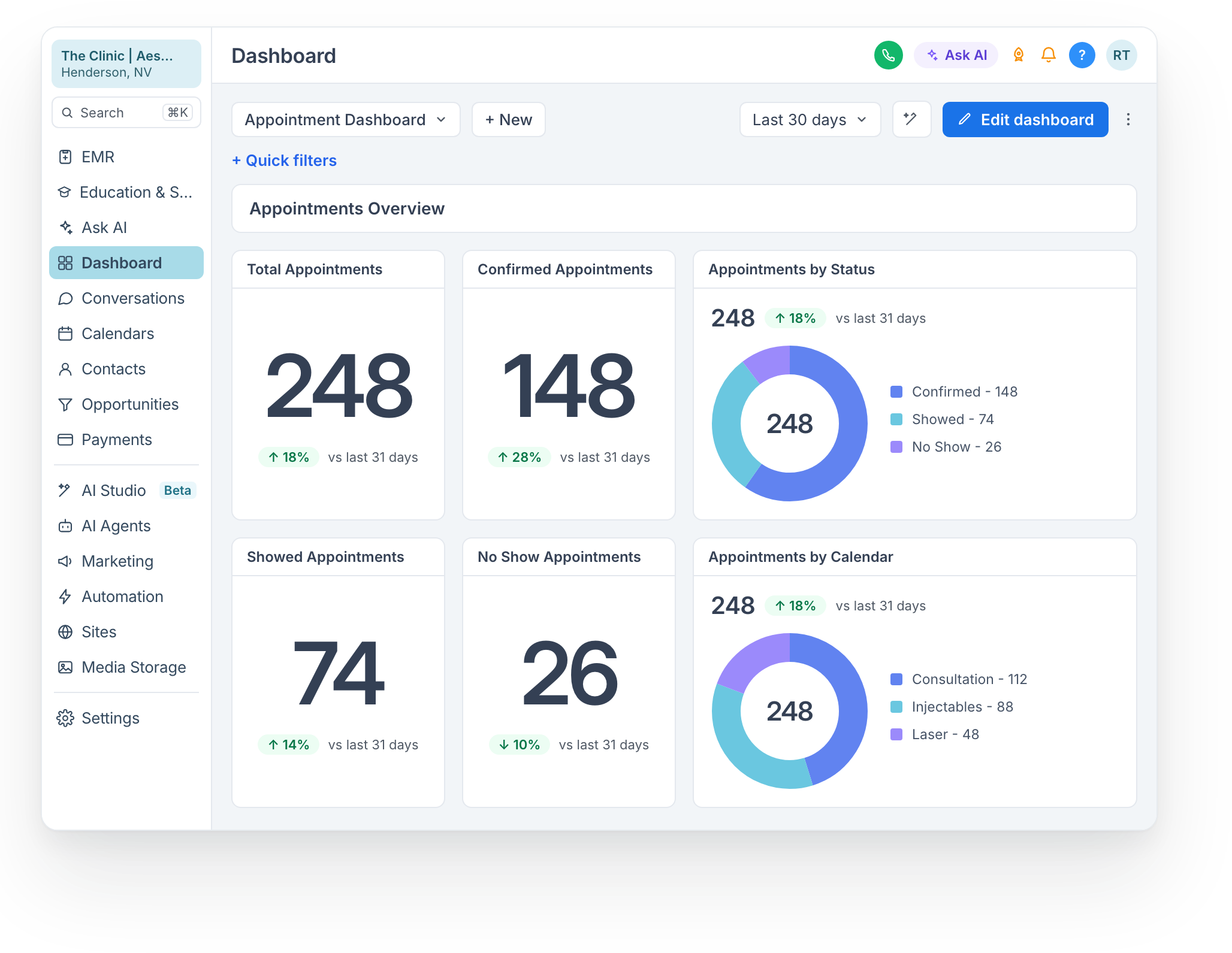
Start with a few clearly defined measures and the records that support them. Do not use an opportunity amount, a booked service value or a payment notification as a substitute for verified collected cash.
Keep each stage distinct
Inquiry: A person has submitted a request or started a relevant conversation. Record the source where it is available and the next action the team needs to take.
Booked visit: An appointment exists for the person and service. State whether your count includes rescheduled, cancelled or duplicate appointments.
Attended or completed visit: The practice has verified the relevant attendance or treatment event. A booked appointment is not evidence that the visit occurred.
Collected payment: A successful positive payment transaction was recorded. Keep pending and failed payments out of collected cash, and show refunds separately or state clearly how they are deducted.
Repeat visit: The patient returns for another verified visit. Agree the time window and the event you count before comparing periods.
Use one reporting window and explain the dates
Choose a reporting period and keep its boundaries consistent. Be clear whether you are counting inquiries received during that period, appointments booked during it, visits scheduled for it or payments collected during it. These are different views and should not be silently combined.
For example, a person may inquire in one month, attend in the next and pay a balance later. Review the journey together, but retain each event’s date. If source matching is incomplete, label it incomplete rather than assigning every payment to the latest campaign.
Separate collected cash from the promise of future value
A deposit may be money collected before treatment. A package purchase may cover multiple future visits. An appointment value describes scheduled work, while an opportunity value describes a sales record. Report each for its own purpose instead of adding them together as if they were separate payments.
When discussing marketing returns, say which payments are connected to the campaign and how that connection was established. If the records only support a booking or inquiry count, report that result. Do not turn it into a revenue claim.
Find the next question in the journey
- Inquiries arriving but few appointments: review the offer, response process and route to booking.
- Appointments booked but attendance uncertain: check attendance evidence and the relevant confirmation, reschedule and reminder process.
- Visits occurring but payment totals unclear: reconcile successful payments, deposits, outstanding amounts and refunds.
- Strong first-visit activity but unclear return activity: agree the repeat-visit window and review the relevant follow-up and appointment records.
These are starting points for investigation, not explanations proved by the numbers alone. Check the actual records and recent changes before deciding what caused a result.
Make the review useful to the owner
Keep a short scorecard with the reporting dates, source, definition and unresolved gap for each measure. Compare like-for-like periods and preserve the original records when a definition changes. A sent message, configured workflow or attractive dashboard should not stand in for the business event you are trying to measure.
For Growth, bring the reports you already use and the decision you want them to help you make. We can discuss acquisition, follow-up and the owner’s view of the practice, then agree the reporting work within your engagement.